الذكاء الاصطناعي الوكيل 2026: تحول المؤسسات بفعالية
فريق تحرير بوابة الذكاء الاصطناعي
هيئة التحرير والتحليل التقني
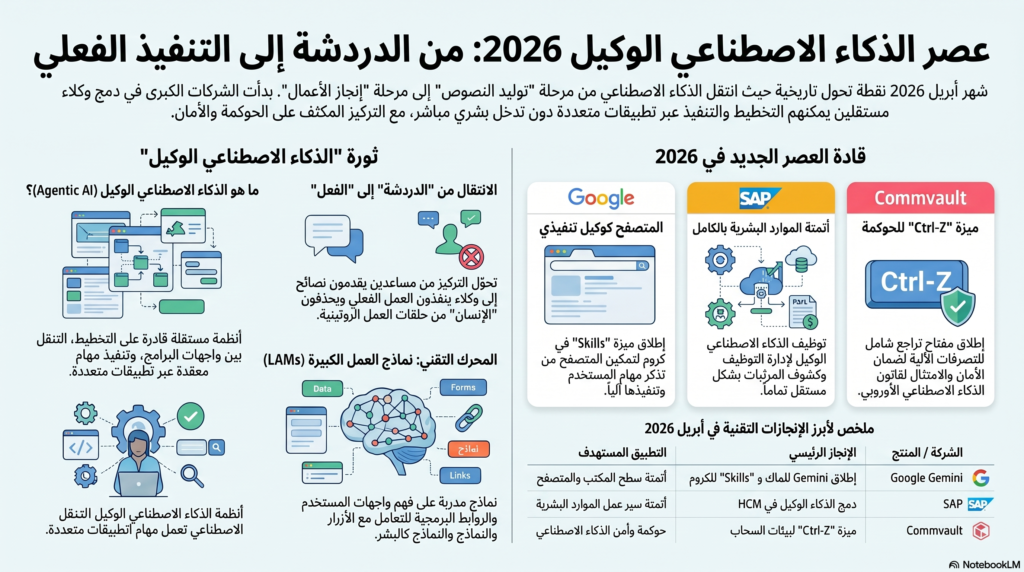
مع دمج SAP لنماذج الوكلاء في الموارد البشرية، وإطلاق Google لوكلاء سطح المكتب Gemini، وتقديم Commvault لضمانات لأعباء العمل السحابية المستقلة، يمثل أبريل ٢٠٢٦ نقطة التحول حيث انتقل الذكاء الاصطناعي من “الدردشة” إلى “القيام”.
النقاط الرئيسية
- انتقل مشهد الذكاء الاصطناعي رسميًا من روبوتات المحادثة إلى “الذكاء الاصطناعي الوكيل”—أنظمة قادرة على تنفيذ سير العمل متعدد الخطوات بشكل مستقل.
- قامت Google بدمج الذكاء الاصطناعي بعمق في أنظمة التشغيل مع Gemini لنظام Mac و”المهارات” في Chrome لإعادة استخدام الأوامر المستقلة.
- تقوم عمالقة المؤسسات مثل SAP بنشر الذكاء الاصطناعي الوكيل للتعامل مع مهام إدارة رأس المال البشري المعقدة دون تدخل بشري.
- الأمان والحوكمة يلحقان بالركب، مع إطلاق Commvault ميزة “Ctrl-Z” لضمان أعباء العمل السحابية للذكاء الاصطناعي للامتثال لتطبيق قانون الذكاء الاصطناعي الأوروبي ٢٠٢٦ القادم.
ما الذي حدث
على مدى السنوات الثلاث الماضية، كان عالم التكنولوجيا مهووسًا بتوليد النصوص وواجهات المحادثة. ومع ذلك، فإن الإعلانات المتتالية خلال أبريل ٢٠٢٦ قد أشارت إلى تحول حاسم. لم يعد الأفق الجديد يتعلق بالتحدث إلى الذكاء الاصطناعي؛ بل يتعلق بنشر الذكاء الاصطناعي الوكيل—أنظمة يمكنها التخطيط والتنقل في الواجهات وتنفيذ المهام عبر تطبيقات متعددة بشكل مستقل.
على صعيد المستهلكين والمطورين، أحدثت Google ضجة هذا الأسبوع بإطلاق Gemini لنظام Mac مع وضع الصوت المباشر وتقديم “المهارات” في Chrome. هذا يحول المتصفح بشكل أساسي إلى وكيل سطح مكتب قادر على تذكر سير العمل للمستخدم وتنفيذه عند الطلب. في الوقت نفسه، قامت Meta بالتلميح إلى مشروع “Muse Spark” الخاص بها، الذي يهدف إلى توسيع النماذج المحلية نحو الذكاء الفائق الشخصي.
لكن التحولات الأكثر أهمية حدثت في قطاع المؤسسات. أعلنت SAP عن طرح ضخم للذكاء الاصطناعي الوكيل ضمن برنامج إدارة رأس المال البشري الخاص بها، مما يسمح للذكاء الاصطناعي بالتعامل بشكل مستقل مع التوظيف، وتوجيه الرواتب، وفحوصات الامتثال. وتوقعًا للمخاطر المترتبة على ترك الذكاء الاصطناعي يعمل بحرية على الخوادم المؤسسية، أطلقت Commvault ميزة “Ctrl-Z” الثورية لأعباء العمل السحابية للذكاء الاصطناعي، مما يمنح مسؤولي تكنولوجيا المعلومات مفتاح تراجع عالمي للإجراءات المستقلة.
الأرقام
لماذا يهم هذا الآن
الانتقال إلى الذكاء الاصطناعي الوكيل يهم الآن لأنه يغير بشكل جذري معادلة العائد على الاستثمار (ROI) للشركات. كان الذكاء الاصطناعي التوليدي يتطلب إشرافًا بشريًا مكثفًا—”إنسان في الحلقة” لقراءة، والتحقق، ونسخ ولصق المخرجات. يهدف الذكاء الاصطناعي الوكيل إلى إزالة الحلقة تمامًا للمهام الروتينية.
نحن نشهد هذا التبني السريع لأن النماذج الأساسية الأساسية قد وصلت أخيرًا إلى حالة من الموثوقية العالية ومعدلات الهلوسة المنخفضة. علاوة على ذلك، فإن الضغط الاقتصادي على الشركات لتعظيم ميزانيات الحوسبة السحابية والبرمجيات قد دفع شركات مثل Microsoft وGoogle وSAP لتقديم ميزات تقوم بالعمل فعليًا، بدلاً من مجرد العمل كشريك في العصف الذهني.
التفصيل التقني
المحرك وراء هذا التحول يعتمد على نماذج العمل الكبيرة (LAMs) وأطر استخدام الأدوات. على عكس LLMs القياسية التي تتنبأ بالرمز التالي للنص، يتم تدريب هذه النماذج الوكيلة على واجهات المستخدم الرسومية (GUIs) ونقاط نهاية API. إنها تفهم كيفية النقر على الأزرار، وملء النماذج، وتمرير البيانات بين صوامع البرمجيات المختلفة.
تستفيد “المهارات” الجديدة في Chrome من Google، على سبيل المثال، من رسم خرائط DOM (نموذج كائن المستند) للسماح لـ Gemini بالتنقل في صفحات الويب بشكل أصلي جنبًا إلى جنب مع المستخدم. في المؤسسات، يستخدم تنفيذ SAP حواجز صارمة، حيث يترجم الطلبات باللغة الطبيعية إلى مكالمات API صارمة تتفاعل مباشرة مع قواعد البيانات الخلفية، متجاوزة الحاجة إلى واجهة أمامية تمامًا.
لدعم هذا الحمل الحسابي الضخم، تتطور البنية التحتية أيضًا. فقط هذا الأسبوع، ظهرت شائعات عن رهان OpenAI الضخم بقيمة ٢٠ مليار دولار على رقائق الذكاء الاصطناعي المتخصصة من Cerebras Systems، مما يبرز حجم الحوسبة المطلوب لتشغيل ملايين الوكلاء المستقلين في وقت واحد.
ما الذي سيأتي بعد ذلك
مع انتقال الوكلاء من البيئات المعزولة إلى الشبكات المؤسسية الحية، ستصبح الحوكمة والامتثال السرد السائد لبقية عام ٢٠٢٦. يقوم قانون الذكاء الاصطناعي الأوروبي بفحص الأنظمة المستقلة بدقة، مطالبًا بسجلات تدقيق صارمة للقرارات التي يتخذها الذكاء الاصطناعي.
هذا هو بالضبط السبب في أن منتجات مثل “Ctrl-Z” من Commvault تصل إلى السوق. يمكننا أن نتوقع انفجارًا في الشركات الناشئة في مجال “أمان الذكاء الاصطناعي” التي لا تؤمن البيانات فحسب، بل تؤمن الإجراءات—مراقبة الوكلاء أثناء التشغيل لمنع التعديلات غير المصرح بها على قواعد البيانات، أو إرسال البريد الإلكتروني الجماعي عن طريق الخطأ، أو تصعيد الامتيازات.
رأينا
عصر “صندوق الدردشة” يقترب من نهايته. إذا كان عام ٢٠٢٤ هو عام استكشاف الذكاء الاصطناعي وعام ٢٠٢٥ هو عام التكامل، فإن عام ٢٠٢٦ هو بلا شك عام التنفيذ.
في حين أن احتمال قيام وكلاء البرمجيات المستقلة بتوجيه الشؤون المالية للشركات أو إدارة البنية التحتية لتكنولوجيا المعلومات قد يكون مخيفًا للبعض، إلا أن المكاسب الإنتاجية هائلة للغاية بحيث لا يمكن تجاهلها. الشركات التي ستفوز في هذا العقد ليست تلك التي تبني نماذج المحادثة الأذكى، بل تلك التي تبني الأطر الأكثر أمانًا وموثوقية للذكاء الاصطناعي لاتخاذ الإجراءات. السباق نحو الوكيل الذكاء الاصطناعي النهائي قد بدأ حقًا.
أنظمة وأكواد جاهزة للتشغيل مرتبطة بهذا الموضوع
معماري أوامر المطورين والوكلاء (BYOK)
بيئة هندسية لبناء أوامر النظام (System Prompts)، قوالب LangGraph و CrewAI، مع دعم مفاتيح BYOK الخاصة بك.
استوديو هندسة الأوامر الذكي
استوديو احترافي لصياغة وهيكلة أوامر الذكاء الاصطناعي مع خزنة سحابية خاصة لحفظ القوالب.
SkillForge AI – AI-Powered Learning Management System
An AI-powered learning platform for discovering courses, generating learning content, managing students and instructors, and delivering a complete…