تحول الإمارات إلى الذكاء الاصطناعي الوكيل بحلول 2028
فريق تحرير بوابة الذكاء الاصطناعي
هيئة التحرير والتحليل التقني
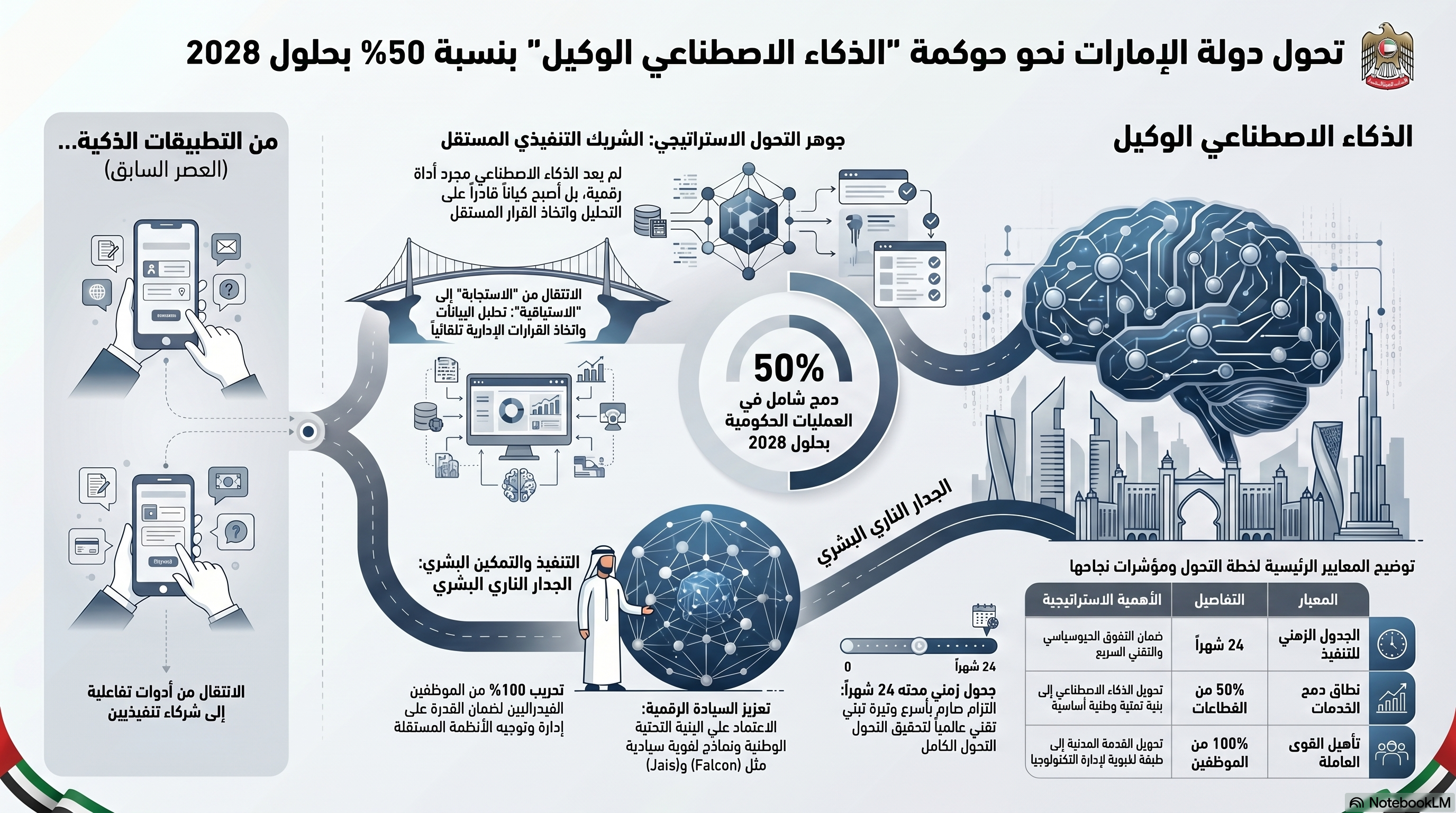
عصر “التطبيق الذكي” قد انتهى. كشفت الإمارات عن تفويض تاريخي للانتقال بنسبة ٥٠٪ من عملياتها الحكومية إلى “الذكاء الاصطناعي الوكيل” المستقل خلال ٢٤ شهرًا، مع إعادة تعريف التكنولوجيا من أداة تفاعلية إلى شريك تنفيذي استباقي.
استمع للمقال
النقاط الرئيسية
- نطاق غير مسبوق: سيتم إدارة نصف جميع القطاعات والخدمات والعمليات الحكومية في الإمارات بواسطة الذكاء الاصطناعي الوكيل المستقل ضمن جدول زمني صارم لمدة عامين.
- تصنيف جديد: لم يعد الذكاء الاصطناعي مصنفًا كأداة رقمية، بل كشريك تنفيذي قادر على التحليل المستقل واتخاذ القرارات والتنفيذ في الوقت الفعلي.
- نهاية التأخير البيروقراطي: سيتم الآن تقييم الكيانات الحكومية بناءً على سرعة تبنيها للذكاء الاصطناعي وإتقانها في إعادة تصميم سير العمل التقليدي حول الأنظمة المستقلة.
- الجدار البشري: سيخضع ١٠٠٪ من الموظفين الفيدراليين لتدريب إلزامي لإتقان الذكاء الاصطناعي، لبناء قوة عمل مدنية الأكثر معرفة تكنولوجيًا وفهمًا للذكاء الاصطناعي في العالم.

ما الذي حدث
في خطوة تتجاوز معايير الإدارة العامة العالمية بشكل جذري، أطلقت الإمارات العربية المتحدة نموذجًا حكوميًا جديدًا مدفوعًا بالكامل بالذكاء الاصطناعي الوكيل. تحت توجيهات مباشرة من رئيس الإمارات، حددت الدولة عدًا تنازليًا عدوانيًا لمدة ٢٤ شهرًا للانتقال من العمليات الرقمية التقليدية إلى بنية تحتية مستقلة ذاتية التنفيذ للذكاء الاصطناعي. سيتم الإشراف على هذا التحول بنشاط من قبل الشيخ منصور بن زايد، بدعم من فريق عمل مخصص لضمان تحقيق الموعد النهائي لمدة عامين دون تنازل. يحدد الإعلان بشكل صريح دور التكنولوجيا في الحوكمة: بدلاً من أن يطلب المواطنون أو الموظفون من البرامج الإجابة، سيعمل الذكاء الاصطناعي الوكيل للحكومة بشكل استباقي. سيقوم بتحليل تدفقات البيانات الضخمة بشكل مستقل، واتخاذ قرارات السياسة المثلى، وتنفيذ المهام الإدارية، وتكرار العمليات في الوقت الفعلي. بشكل حاسم، قامت القيادة الإماراتية بتحييد القلق العالمي المحيط بإزاحة الوظائف بواسطة الذكاء الاصطناعي من خلال الإعلان عن تفويض استثمار بشري ضخم. بدلاً من استبدال القوى العاملة لخفض التكاليف، سيتم تدريب كل موظف فيدرالي لإتقان الذكاء الاصطناعي. الهدف هو ضمان أن يدير المواطنون ويدققوا ويوجهوا هذه الأنظمة المستقلة، بدلاً من التنافس معها.
الأرقام
لماذا هذا مهم الآن
على مدار العقد الماضي، سعت الحكومات في جميع أنحاء العالم إلى مفهوم “الحكومة الإلكترونية” من خلال رقمنة الأوراق وإطلاق تطبيقات الهواتف الذكية. إعلان الإمارات يمزق تمامًا هذا الكتاب، محولًا النموذج من *المساعدة الرقمية* إلى *التنفيذ المستقل*. هذه التوجيهات هي ضربة جيوسياسية بارعة. بينما يظل المشرعون في الولايات المتحدة وأوروبا عالقين في معارك تنظيمية معقدة ونقاشات نظرية حول الذكاء الاصطناعي، تركز الإمارات على التنفيذ السريع والعملي. من خلال اختبار الذكاء الاصطناعي الوكيل على مستوى الدولة، تضع الإمارات نفسها كصندوق رمل عالمي نهائي. سيصبح هذا مغناطيسًا لا يقاوم لأفضل المواهب العالمية في مجال الذكاء الاصطناعي والاستثمارات التقنية الأجنبية التي ترغب في رؤية نماذجها تعمل على نطاق وطني حي. علاوة على ذلك، يشعل سباقًا تقنيًا إقليميًا شرسًا، مما يضع ضغطًا هائلًا على مراكز دول مجلس التعاون الخليجي المجاورة لتسريع تنفيذاتها الخاصة بالذكاء الاصطناعي للحفاظ على الوتيرة.
التحليل الفني ونهاية الاحتكاك
يمثل الانتقال من النماذج اللغوية الكبيرة التقليدية (LLMs) إلى الذكاء الاصطناعي الوكيل قفزة هائلة في القدرة. يتطلب روبوت الدردشة العادي تحفيزًا بشريًا لصياغة مستند. بينما يمتلك النظام الوكيل استقلالية موجهة نحو الهدف. كيف يبدو هذا في الممارسة؟ بدلاً من أن يقوم صاحب العمل بتقديم طلب لتجديد الرخصة، وتحميل المستندات، وانتظار الموافقة البشرية، سيراقب الذكاء الاصطناعي الوكيل انتهاء الصلاحية، ويقوم بالتحقق بشكل مستقل من الوضع المالي والقانوني للشركة عبر قواعد بيانات الوزارات المتعددة، ويصدر التجديد فورًا. ومع ذلك، فإن تشغيل حكومة كاملة بشكل آمن يتطلب سيادة بيانات مكثفة. سيؤدي هذا التفويض حتمًا إلى تعزيز تطوير بنية تحتية سيادية للذكاء الاصطناعي. توقع رؤية استثمارات ضخمة في نماذج لغوية عربية كبيرة متقدمة – مثل معماريات فالكون وجيس الخاصة بالإمارات – مدربة خصيصًا على الأطر القانونية والثقافية والإدارية المحلية لتعمل كـ “عقول” آمنة للغاية وغير قابلة للاختراق لهذه الأنظمة الوكيلة الجديدة.
ما الذي سيأتي بعد ذلك
ستكون الأشهر الـ ٢٤ القادمة اختبارًا صارمًا وعالي المخاطر للبنية التحتية وقابلية التكيف المؤسسي. لن يتم قياس الإدارات الحكومية بعد الآن بناءً على مؤشرات الأداء الرئيسية التقليدية فقط، بل على مرونتها التشغيلية في دمج هذه الأنظمة المستقلة بسلاسة. إذا نجحت الإمارات في تحويل ٥٠٪ من عملياتها إلى الذكاء الاصطناعي الوكيل بحلول عام ٢٠٢٨ دون اضطرابات كبيرة، فستكون قد أنشأت أكثر صادرات التكنولوجيا ربحية في العقد. تمامًا كما كانت الدول النامية تنظر إلى وادي السيليكون للإلهام الرقمي، ستنظر إلى أبوظبي ودبي لشراء المخطط التشغيلي للدولة المستقلة في القرن الحادي والعشرين.
وجهة نظرنا
في بوابة الذكاء الاصطناعي، لاحظنا في وقت سابق من هذا العام أن عام ٢٠٢٦ هو عام “الذكاء الاصطناعي الوكيل” – حيث تتوقف النماذج عن التلخيص وتبدأ في *القيام*. هذا التوجيه الإماراتي هو التحقق النهائي من هذا التحول على الساحة العالمية. ما يجعل هذا النهج حقًا رؤيويًا هو استراتيجية “الجدار البشري”. من خلال ربط هذا الانتشار التكنولوجي العدواني بتفويض لتطوير مهارات كل موظف فيدرالي، تتجنب الإمارات الفخ القاتل للبطالة المدفوعة بالتكنولوجيا. إنهم يدركون أن النموذج الحكومي الأقوى في المستقبل ليس هو الذي يستبدل فيه الذكاء الاصطناعي البشر لتوفير بضعة دراهم. بل هو الذي يقضي فيه الذكاء الاصطناعي الوكيل على الاحتكاك البيروقراطي، مما يسمح لقوة عمل بشرية مدربة تدريبًا عاليًا بالتركيز بالكامل على الاستراتيجية رفيعة المستوى، والإشراف، والتعاطف مع المواطنين، والابتكار المستمر.
أنظمة وأكواد جاهزة للتشغيل مرتبطة بهذا الموضوع
مساعد المكالمات الفوري LiveAssist
مساعد صوتي ثنائي اللغة بالوقت الفعلي لاجتماعات Zoom/Teams مع ربط مستندات الشركة (RAG).
SkillForge AI – AI-Powered Learning Management System
An AI-powered learning platform for discovering courses, generating learning content, managing students and instructors, and delivering a complete…
AI SaaS Website Analyzer Tool
Instantly analyze any website URL and get detailed AI-powered insights, website quality assessments, SEO analysis, and actionable recommendations.